
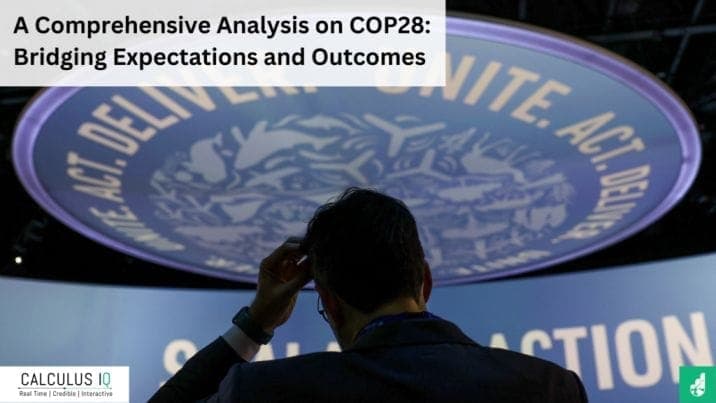
Introduction to COP28: Unveiling the Climate Imperative in Dubai

COP28, convened in the vibrant city of Dubai, stood at the crossroads of a planet in urgent need of decisive climate action. The conference bore the weight of global expectations, mirroring the collective consciousness that recognizes the critical juncture humanity finds itself in concerning environmental sustainability.
At the heart of COP28's agenda was the Global Stocktake (GST), a pivotal component mandated by the Paris Agreement. The GST's intricate focus on mitigation, adaptation, and climate finance underscored the need for comprehensive evaluations and fortified commitments. This mechanism, involving scientists, institutions, and private sector stakeholders through the We Mean Business Coalition, aimed to assess the progress made and galvanize stronger global commitments.
The heightened anticipation stemmed from the stark reality revealed by the shortcomings of the updated Nationally Determined Contributions (NDCs) presented in Glasgow. As the Glasgow commitments fell short of aligning the world with its temperature targets, COP28 assumed a pivotal role in recalibrating the trajectory of international climate efforts. The outcomes of COP28 were destined for meticulous scrutiny, poised to shape the narrative of the next crucial phase in the ongoing battle against climate change.
Mitigation and Fossil Fuels
Mitigation and the pivotal question of fossil fuels assumed center stage at COP28, navigating the delicate intersection of global ambitions and the practicalities of a sustainable energy transition. The expectations were marked by a resounding call to confront the intricate challenges posed by unabated fossil fuels and to define decisive timelines for their phase-out.
In the wake of COP27's generic provisions on low-emission energy, COP28 witnessed an intensified push for specificity. The European Union (EU) emerged as a key proponent, advocating for a resolute global phase-out of unabated fossil fuels well before 2050. The nuance, however, lay in the considerations for developing nations, amplifying the discourse on a fair distribution of the carbon budget among nations with varying economic landscapes.
A notable stride in COP28's journey was the industry's commitment to reducing scope 1 and 2 emissions related to oil and gas production. This marked a tangible move toward sustainability in the production processes of fossil fuels. However, the formidable challenge of scope 3 emissions, emanating from the final consumption of oil and gas, remained a pressing concern. COP28 grappled with the need for a comprehensive strategy that transcended production-centric commitments to address the broader carbon footprint of fossil fuel consumption.
Simultaneously, the call for a global target for renewables and energy efficiency echoed with increasing resonance throughout COP28. Spearheaded by the EU, this ambitious target aimed at tripling renewable power capacity and doubling energy efficiency improvements by 2030. The proposal garnered substantial backing, finding alignment with major players on the global stage, including the United States and China. The vision was clear: a concerted effort to revolutionize the energy landscape, harnessing the potential of renewables while enhancing efficiency to meet the pressing demands of a sustainable future.
As COP28 unfolded, the discourse on mitigation and fossil fuels encapsulated the delicate dance between lofty expectations and the nuanced realities of a world in dire need of transformative change. The industry's incremental commitments, the push for a global renewables target, and the persistent debates around unabated fossil fuels set the stage for a crucial evolution in the ongoing battle against climate change. The outcomes of COP28, with their blend of achievements and challenges, now stand as beacons guiding the trajectory of global mitigation efforts and the intricate transitioning away from fossil fuels.

Image 1: COP28 President Dr. Sultan bin Ahmed Al Jaber
The Fossil Fuel Agreement is the first by the United Nations to explicitly call for countries to move away from the burning of fossil fuels like coal, oil, and gas.The agreement is the first by the United Nations to explicitly call for countries to move away from the burning of fossil fuels like coal, oil, and gas.
Climate Finance and Loss & Damage
The issue of climate finance, grounded in the principle of common but differentiated responsibilities, was a core concern.The issue of climate finance, grounded in the principle of common but differentiated responsibilities, was a core concern.
Expectations:
- Climate Finance Commitments: The expectation centered on developed nations meeting the long-standing commitment of providing $100 billion annually, acknowledging common but differentiated responsibilities among nations.
- New Climate Finance Target: Anticipation surrounded the initiation of negotiations for a post-2025 climate finance target, intending to replace and exceed the existing $100 billion pledge.
- Multilateral Development Banks (MDBs): A focus on reforming MDBs garnered attention, aiming to enhance their role in climate finance. Discussions unfolded on risk-sharing strategies and mobilizing private finance through innovative mechanisms.
- Loss and Damage Fund: The significant expectation was the continued discussion and progress on the operationalization of the Loss and Damage Fund, addressing financial assistance to nations grappling with climate-induced disasters.

Chart 1: Pledges to different Climate funds w.r.t Countries at COP28
Achievements:
- Climate Finance Commitments: Progress was made as developed nations committed $89.6 billion to developing countries in 2021, constituting 68% through concessional loans. The commitment was considered adequate for de-risking but sparked debates on the proportion of grants.
- New Climate Finance Target: COP28 saw an agreement to draft a post-2025 finance target, signaling a step forward. While details will be finalized later, the agreement marked progress in addressing the financial gap.
- MDBs and Innovative Financing: Discussions on reforming MDBs unfolded, aiming to bolster their capacity to assist developing nations. The exploration of innovative financing mechanisms gained momentum, pointing toward a potential shift in financial strategies.
- Loss and Damage Fund: A pivotal achievement was the operationalization of the Loss and Damage Fund, a key outcome from COP27. Funding commitments, totaling approximately US$800 million, were secured during COP28. However, challenges persisted in defining eligible nations, determining funding sources, and establishing the fund's host.
The landscape of climate finance and the operationalization of the Loss and Damage Fund reflected a dynamic interplay of expectations and achievements at COP28. While strides were made in financial commitments and the initiation of discussions for a new climate finance target, the intricacies of fund administration and eligibility criteria underscored the complexity of addressing climate-induced vulnerabilities globally.
Adaptation and Food Systems
Adaptation, historically overshadowed by mitigation, gained prominence. COP27’s commitment to double adaptation finance found fruition in the Sharm-El-Sheikh Adaptation Agenda. Also, Food systems emerged as a hyper-focused theme, acknowledging their significant contribution to global greenhouse gas emissions.
Expectations:
- Global Goal on Adaptation: Anticipation surrounded the adoption of the Global Goal on Adaptation, providing an international framework with objectives and indicators to monitor and quantify progress. Developing countries sought specific, absolute goals reflecting varying exposures to climate change and domestic financial capacities.
- Adaptation Finance: Expectations were high for continued commitments to adaptation finance, building on COP27's commitment to doubling such funding. The focus was on ensuring that adaptation projects receive adequate financial support, given their local nature and limited business cases.
- Food Systems Agenda: The expectation was for COP28 to address the significant contribution of food systems to global greenhouse gas emissions. The Food Systems and Agriculture Agenda, launched in July 2023, aimed to align national policies with NDCs and National Adaptation Plans by 2025.

Chart 2: Countries on track for the 1.5 C goal
Achievements:
- Global Goal on Adaptation: COP28 witnessed progress in defining common adaptation goals crucial for the entire world. These goals included addressing climate-induced water scarcity, achieving climate resilience in food and agricultural production, and enhancing resilience against climate-induced health impacts.
- Adaptation Finance: The COP28 outcomes included commitments to doubling adaptation finance, building upon COP27's commitment. This signified a recognition of the importance of adaptation activities, even as challenges in financing adaptation projects persisted.
- Food Systems Agenda: The hyper-focused theme of food systems materialized in COP28's discussions. Acknowledging that food systems contribute significantly to global greenhouse gas emissions, the Food Systems and Agriculture Agenda aimed to align national policies with climate goals, providing a blueprint for comprehensive measures.
The achievements in adaptation and food systems at COP28 demonstrated a shift in prioritizing these often-overlooked aspects of climate action. The progress in defining global adaptation goals and aligning food systems with climate goals marked positive strides, reflecting an evolving approach to holistic climate solutions.
Carbon Markets
The discussion on carbon markets, vital for cost-effective emissions reductions, concluded without a conclusive agreement. This outcome left key questions regarding the supervision and accounting of credits for COP29. The unresolved issues underscored the complexities surrounding the establishment of high-integrity carbon markets. Here are some of the major pointers of differentiation between the anticipated outcomes and reality:
- Clarification on Carbon Markets:
- Anticipated Outcome: Clear guidelines and agreements on the functioning, supervision, and accounting of carbon markets.
- Reality at COP28: The discussions, though vital, concluded without a conclusive agreement, leaving uncertainties in crucial areas.
- Progress Toward Cost-Effective Emission Reductions:
- Anticipated Outcome: Advancements in frameworks promoting cost-effective emissions reductions through well-structured carbon markets.
- Reality at COP28: The absence of a conclusive agreement raised questions about the progress toward establishing effective and economically viable carbon markets.
- Supervision and Oversight Mechanisms:
- Anticipated Outcome: Establishment of robust supervision and oversight mechanisms ensuring the integrity of carbon markets.
- Reality at COP28: The lack of a conclusive agreement left unanswered questions about how future carbon markets would be supervised and maintained to uphold high standards.
- Accounting of Carbon Credits:
- Anticipated Outcome: Clear protocols for the accounting of carbon credits, addressing issues related to transparency and credibility.
- Reality at COP28: The unresolved issues underscored the complexities of reaching a consensus on how carbon credits would be accounted for, posing challenges for the future.
- Setting the Stage for COP29:
- Anticipated Outcome: A solid foundation and understanding of carbon market frameworks to facilitate smoother discussions and agreements at COP29.
- Reality at COP28: The lack of a conclusive agreement meant that key questions regarding carbon markets would carry over to COP29, indicating the need for continued negotiations.
- Addressing Complexities in Establishing Carbon Markets:
- Anticipated Outcome: Acknowledgment and resolution of complexities surrounding the establishment of high-integrity carbon markets.
- Reality at COP28: The outcome highlighted persistent challenges and complexities, emphasizing the intricate nature of reaching agreements in the realm of carbon markets.
- Commitment to Emission Reduction Goals:
- Anticipated Outcome: Demonstrated commitment to global emission reduction goals through effective carbon market strategies.
- Reality at COP28: The lack of conclusive agreements raised concerns about the commitment and readiness of nations to use carbon markets as a tool for achieving emission reduction targets.
- Collaboration for Sustainable Solutions:
- Anticipated Outcome: Collaborative efforts towards sustainable solutions in carbon markets, balancing economic interests with environmental goals.
- Reality at COP28: The unresolved issues indicated that collaborative efforts toward sustainable solutions in carbon markets required further deliberation and negotiation.
In summary, while the expectations for COP28 in the domain of carbon markets were ambitious, the reality presented challenges and unresolved issues. The complexities inherent in reaching global agreements on carbon markets underscored the intricate nature of addressing climate change on an international scale. The outcomes set the stage for ongoing discussions and emphasized the need for continued efforts in establishing effective and high-integrity carbon markets.
Conclusion: Navigating the Climate Landscape at COP28

Image 2: World Heads of State at Al Wasl during the UN Climate Change Conference COP28
COP28 unfolded against the backdrop of heightened expectations and urgency surrounding climate action. The outcomes, though notable in some aspects, painted a nuanced picture of the challenges inherent in global climate negotiations.
- Expectations Met with Complexity:
- Mitigation and Fossil Fuels: The agreement's call for a transition away from fossil fuels was a notable achievement but lacked specific timelines, leaving a critical aspect unresolved. Tripling renewable energy and doubling energy efficiency were recognized, offering potential emissions reductions, but the complexities of implementation were evident.
- Climate Finance and Loss and Damage: The operationalization of the Loss and Damage Fund marked progress, yet challenges persisted in determining eligible nations, funding sources, and the fund's host. Climate finance discussions saw movement, but the specifics of a new annual target remained to be defined.
- Adaptation and Food Systems: Adaptation gained prominence, culminating in the Sharm-El-Sheikh Adaptation Agenda. The proposed Global Goal on Adaptation hinted at a more comprehensive international framework, but details were yet to be solidified. The heightened focus on food systems recognized their significant contribution to emissions, aligning with the Food Systems and Agriculture Agenda's critical move.
- Carbon Markets: Expectations for clear guidelines and agreements on carbon markets were not met, leaving uncertainties in supervision, accounting, and overall functionality. The unresolved issues underscored the complexities surrounding the establishment of high-integrity carbon markets.
- Challenges in Bridging Global Ambitions and Diverse Needs:
- Fossil Fuel Phase-Out: The contentious nature of discussions on fossil fuel phase-out highlighted the challenge of finding a common ground that accommodates both ambitious global goals and the developmental needs of nations, particularly those heavily reliant on fossil fuels.
- Methane Emissions: The resistance to specifying targets for methane emissions reduction showcased the delicate balance required to address potent greenhouse gases without adversely affecting sectors like agriculture in certain countries.
- Concrete Quantitative Commitments: The absence of concrete quantitative commitments in various areas, including carbon markets and climate finance, reflected the ongoing struggle to translate broad intentions into measurable and impactful actions.
- Looking Ahead to COP29:
- Just Transition and Nature-Positivity: The focus on just transition and nature-positivity emerged as critical themes. While acknowledged, more work was deemed necessary to define these concepts quantitatively, indicating an evolving landscape for future negotiations.
- Continued Complexities: The outcomes set the stage for COP29 in Baku, Azerbaijan. The complex terrain of climate negotiations persists, requiring sustained efforts to bridge gaps, overcome challenges, and transform promises into impactful climate action.
In conclusion, COP28 was a chapter in the ongoing narrative of global climate negotiations. It reflected a delicate balance between ambitious global aspirations and the diverse, often divergent, needs of nations. The achievements underscored progress, but the complexities highlighted the need for sustained commitment and collaboration on the path to meaningful climate action. As the world anticipates COP29, the focus on turning promises into concrete commitments remains paramount for addressing the intricate challenges of climate change on a global scale.