

The voluntary carbon market has experienced significant growth in the first four months of 2024, with credit retirements on track for a record-breaking year. Despite facing a wave of bad press and controversies, the market has seen a substantial increase in credit retirements, indicating strong demand for carbon credits.
Changing Priorities in Carbon Markets
The international voluntary carbon market has experienced a significant shift in focus over the past decade. Project developers are increasingly turning their attention from traditional REDD+ (Reducing Emissions from Deforestation and Forest Degradation) initiatives to forest management solutions in developed countries. This change reflects a broader trend towards improving CO2 sequestration in forests, particularly in the Americas.
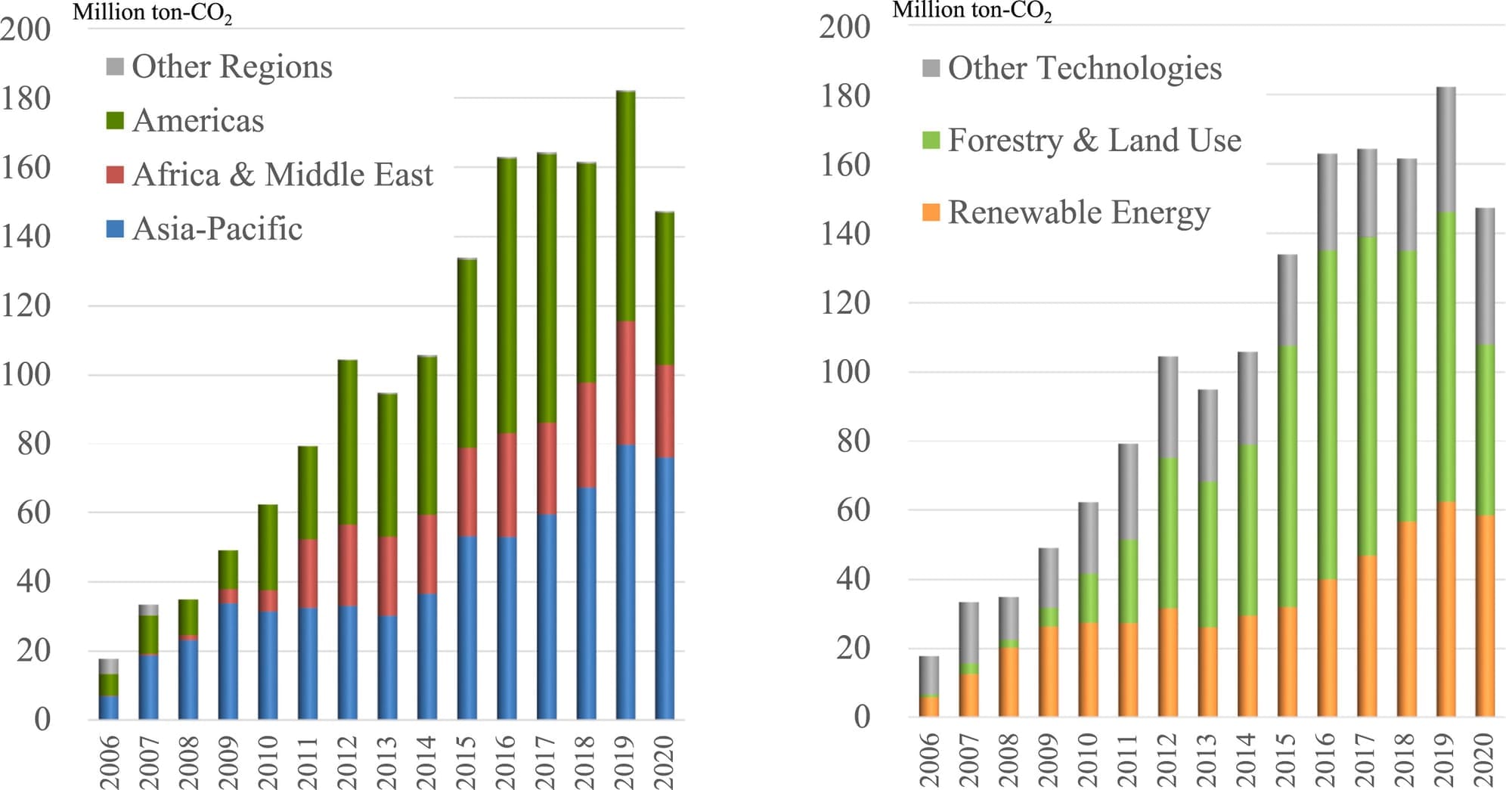
Graph 1: Region-wise and Project type wise Credits issued throughout the years (Source - Carbon Pulse)
Regional Differences in Carbon Offset Strategies
Data indicates that the emphasis on forest management projects has grown, especially in developed regions. This shift is largely driven by the expansion of nature-based solutions targeting forest ecosystems in these areas. Meanwhile, renewable energy projects continue to dominate carbon credit generation in the Asia-Pacific region, with a substantial focus on wind and solar power. In contrast, the Africa & Middle East regions have seen a rise in carbon credits from cookstove initiatives, highlighting the diverse strategies employed across different regions.
The Decline of REDD+ Projects
Since 2016, the share of REDD+ projects in the overall carbon market has declined. Initially, these projects saw increased support due to their potential to reduce deforestation and forest degradation in developing countries. However, the growing emphasis on forest management projects in developed nations has led to a shift in priorities. This transition is partly driven by the advocacy of major corporations, including tech giants like Microsoft and Amazon, and oil majors such as Shell, who have championed nature-based solutions.
Renewable Energy: A Regional Perspective
The increase in carbon credits from renewable energy projects has been particularly notable in the Asia-Pacific region. Countries like India and China have prioritized solar and wind projects to address electricity shortages and coal-related air pollution.
The falling costs of these technologies have further boosted their adoption. However, the shift from hydropower to solar power reflects changing economic realities, with solar power becoming more cost-effective while hydropower remains expensive.
Emerging Technologies and Future Trends
In addition to traditional projects, the carbon market is seeing a rise in household and community carbon offset initiatives, such as cookstove programs, which offer health and convenience benefits. Emerging technologies like direct air capture are also gaining attention, though their current contribution remains limited.
Looking ahead, the future of the carbon market will be shaped by regulatory changes and energy market trends. Econometric models will play a crucial role in understanding the impact of new policies and market dynamics on the issuance and pricing of carbon credits.
Conclusion
The voluntary carbon market is evolving, with a growing focus on forest management in developed countries and renewable energy in the Asia-Pacific region. These changes reflect broader economic and environmental shifts, influenced by technological advancements and corporate advocacy. As the market continues to adapt, understanding regional differences and emerging trends will be essential for navigating the complexities of carbon offset projects.